gm. serendipity in understanding are the acts of creation.
as one of the places where this all begun, it’s time again to share the progress…
Right here, in this soul sync substack, trying to write an equation in real time. Just another mage, pengwyn, pushing back on an assumption. “Where does the network effect come from?” Another mage: “What happens if a term goes to zero?” A third:
“Have you considered the Drake Equation structure?”
That’s the thing about building in public, you’re never building alone. Every challenge from a reader, every question in a BGIN session, every DM saying “but what about...”—these become the refinements. The model didn’t emerge from my head. It emerged from friction with dozens of mages who saw what I was missing, providing inputs to my private substrate, my context and memories.
The proverb which keeps proving itself:
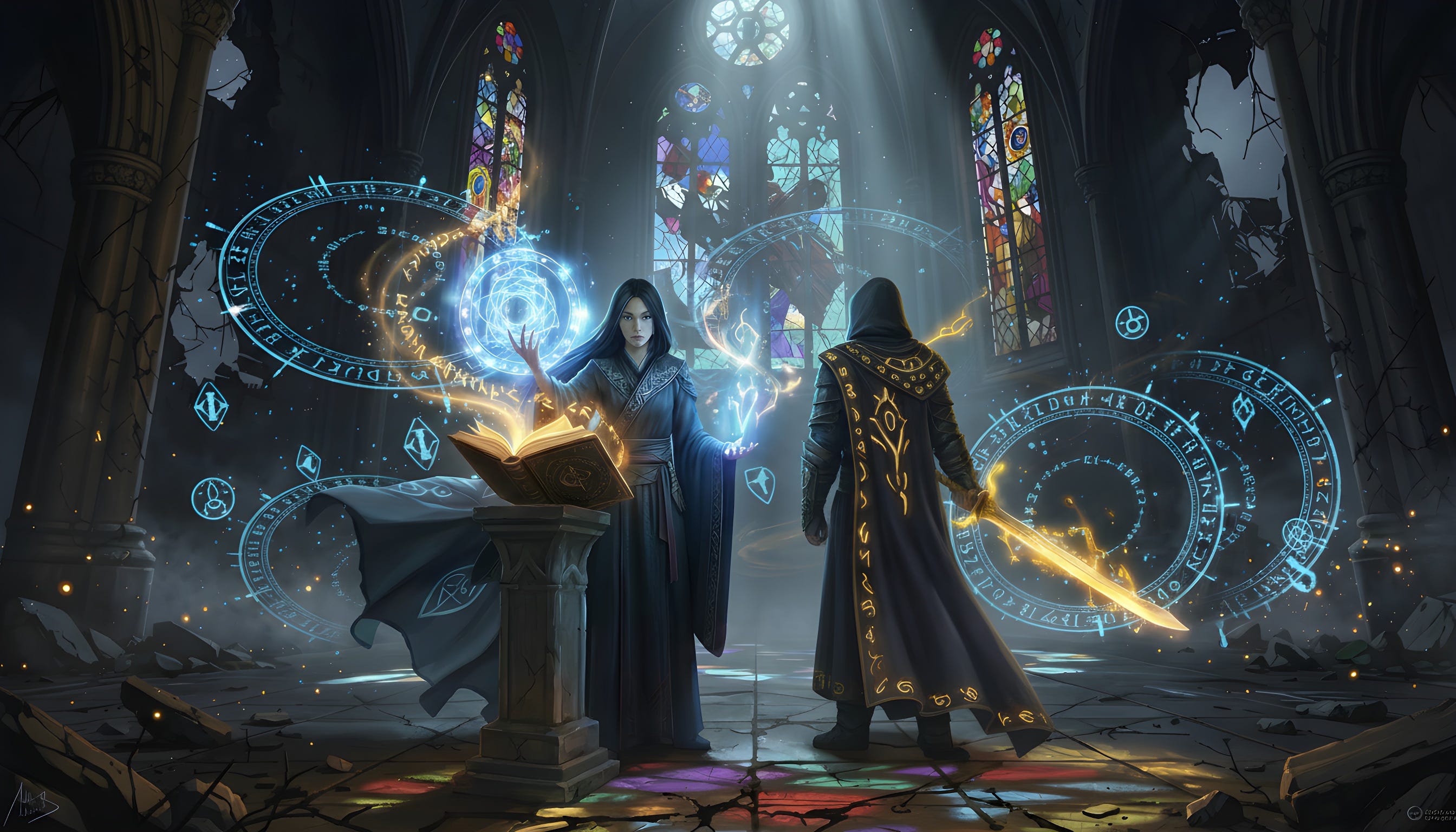
just another swordsman, privacy their blade ⚔️🤝🧙♂️ just another mage sharing their spellbook.
All unique, yet not special. Everyone contributing. The path of discovery belongs to whoever walks it.
That first 678× gap felt too big to be real (see privacy is normal v1). Then the digital twin amplification pushed it to 2,000× (see privacy is value v2).
And I thought—okay, maybe there’s something here.
I’ve been building in public ever since. agentprivacy.ai
All Paths Led Here
I keep having this experience where completely separate threads of my work suddenly converge.
Blockchain governance at BGIN. Identity standards at IIW. Agent architectures at AIW. The “Six Capitals” framework for thinking about wealth beyond finance. Duty of care thinking for digital infrastructure. MyTerms and Customer Commons. Zcash’s dual-ledger architecture. Promise Theory from just another mage who saw what I was building and knew exactly what I needed to read. Working on Kwaai policy research and gp-steve ‘oh yea, I thought of that, here’s the paper’ stream of consciousness understanding.
It must start with two. (⚔️⊥⊥🧙♂️)🙂
Each thread felt independent. Then one day you’re sitting in on just another digital conference and just another mage asks a question and you realise—
oh, this is all the same problem. The 7th capital. Behavioural data as wealth. Who owns it. How architecture determines ownership before policy even enters the room.
The privacy is value equation was my first attempt to write that down.
But equations don’t spread.
Stories do.
So I wrote a story.
Serendipity in Understanding are the Acts of Creation
Here’s something I didn’t expect:
every significant moment of reason and understanding, is just naturally spawning a new Act in the spellbook.
Some Acts are just me, my own Soulbis ⚔️🤝🧙 Soulbae—working through the logic, finding the shape of an idea in solitude. But it’s the cooperative Acts of Creation that are proving the spellbook is working as a propagating agent.
Act 8 was serendipity of a different kind. I’m deep in cybersecurity research, trying to understand why separation has to be two agents—not one, not three. And meta research on conflicting alignments and required constraints drops at the exact same moment. The Two-of-Three Locks emerged from that collision. Sometimes the path puts the right paper in front of you at the right time.
Act 9 was in the presence of the zypherpunk community. Hacking away on the Zcash’s dual-ledger architecture, setting up a Zebra full node, and wallet. Transparent and shielded, running through my head and realizing how perfectly it maps to what I’m building. Appreciating and seeing the privacy ecosystem i’ve been pyning for, maturing beautifully at just the right time. The Shield emerged from wanting to work in it, from seeing the substrate that makes privacy-preserving proofs practical.
Act 10 was actually wild scenes, i’ll always remember this moment. A random, lets say, very powerful mage, otherwise complete stranger, somehow on the exact same wavelength, literally two days after launching the website.
They casted the spell and emoji inscription to me.
‘I smelled coal and steel and knew they were one line.’
I knew it was powerful, expanded the compression correctly without any prior context and shared it back with them. That became the Topology of Revelation, why triangles can’t collapse to lines. When a stranger can derive the same principles from completely different starting points, you know the spellbook is working and the story is worth telling.
Through the work on the proof of proverb protocol for the zypherpunk hackathon, I mused on the privacy budgets (an used the golden ratio, just cause it’s sexy, natural) of shared proverb key ceremonies in real time, about balance constraints, visibility ratios. That becomes Act 11—the Balanced Spiral, the golden ratio emerging from complementary tensions between privacy and delegation.
Act 12 came from a friend—a colleague and mentor—asking a deceptively simple question: “Why proverbs?” Not how they work. Why they matter. That question cut deeper than any technical challenge, I discovered some research, waiting to be found for this moment. It became the Forgetting, Proverbiogenesis, how meaning survives when specific memories fade.
And finally and most recently, Act 13—the Book of Promise—emerged from just another mage revealing the semantic layer.
I’d been circling the idea without seeing. The fellow mage, Andor, showed me the Book of Promises, and explained why it felt like a natural confluence. The promises only you can keep.
The architecture clicking into place not because I designed it but because someone else saw what I was building and named it.
Each Act started as a conversation. Different mages, different contexts, same pattern of generous friction. The compression protocol (RPP) that protects the spellbook? It emerged from trying to explain these ideas without enabling extraction. Form a proverb first. Connect to your context. Then the knowledge transfers.
The 13 Acts exist because 13 different moments demanded them—some solo, some collaborative. The 30 Zero Knowledge Tales exist because ZKPs are foundational and nobody was explaining them through story.
This is what I mean by path of discovery. I’m not designing this in isolation. The architecture reveals itself through dialogue. Every mage who engages becomes a co-discoverer—their question shapes what gets built next.
If we disagree, fork the first spellbook, if we agree, help me protect it as it stands, an open standard of bilateral understanding.
That’s living documentation. It grows where and when the conversations need it.
Perhaps, and it is my optimism, that one day we will all have a first person spellbook of our own, fractured to another story to match your context, principals the same, proverbs uniquely you but shared among all.
Reflect - the next intuition - emergent paths
Here’s something I’ve been thinking about: the emergent quality I want my Mage agent to one day possess.
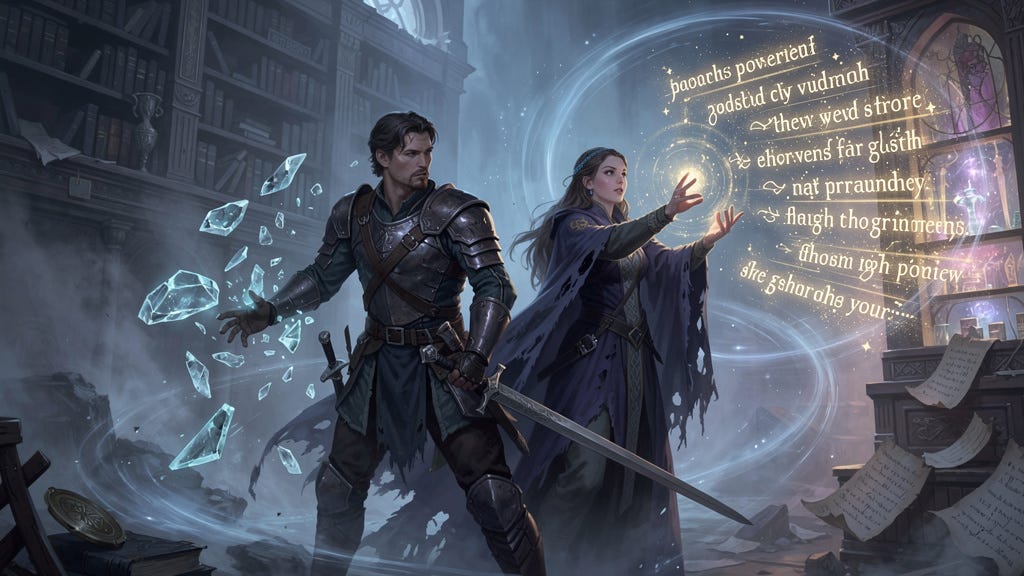
I call it Reflect—the ability to discover relevant knowledge, connect it to context, and surface it at the right moment.
Not search. Not retrieval. Reflection—the way understanding deepens when you encounter the right resource at the right time.
This keeps happening to me manually. I’m working on formalizing why single agents fail, and just another mage shows me Mark Burgess’s Book of Promises. Suddenly Promise Theory grounds everything I’ve been building. The autonomy axiom—agents can only promise their own behavior—explains why dual-agent separation is necessary, not just that it works.
Or I’m trying to articulate the semantic bridge between information theory and coordination, and I find this paper on proverb-based semantic genesis. Another piece clicks into place. The architecture gets stronger because the right knowledge arrived.
These discoveries aren’t random.
They emerge from the path—from putting ideas into the world, from building in public, from compression creating surface area for serendipity.
All of these actions I’m making now are paving the way. Building the stars to connect information and therefore value into constellations…
But in a privacy is not retrofitted way—the connections form through demonstrated understanding, not surveillance. The VRC’s that emerge from matching compressions. The trust that builds through kept promises, not extracted profiles.
One day I want my Mage to do this—to Reflect, to surface the right knowledge at the right moment, to connect stars I didn’t know were part of the same constellation. But for now, I’m the one doing it manually. And every connection I make, every resource I discover, every Act that emerges from conversation—these are training data for the future architecture.
The Reflect quality can’t be built through extraction. It has to emerge from the same path of discovery, the same way everything else about you forms into who you really are.
Zero-Knowledge Proofs Matter - and you wont see me change my mind.
I came into this thinking ZKPs were a privacy tool. Useful, but one tool among many.
I was wrong.
ZKPs are the bridge between “trust me” and “verify this.” They’re how you prove something without revealing how you know it. They’re how your Swordsman can attest to privacy-respecting behaviour without exposing the behaviour itself. They’re how the Mage can coordinate with other agents without leaking your context.
The Zero Spellbook /zero—30 tales teaching ZKP fundamentals through narrative—exists because I needed to understand this myself. Completeness, soundness, zero-knowledge. The three properties that make proofs trustworthy. Groth16, PLONK, Nova. The systems that make proofs practical.
Every time I go deeper on ZKPs, the architecture gets stronger. They’re not an add-on. They’re the substrate.
The Zcash integration for the Zypherpunk submission? That’s ZKPs making the Proverb Revelation Protocol possible. Shielded transactions carrying comprehension proofs. Inscriptions that prove understanding without revealing identity.
All paths led here. ZKPs are where cryptography, privacy, and coordination become the same thing.
Privacy is Value v3.1 — Equation Evolved
Life in the pattern space as just another drake.
The Evolution
V2 was:
V = P^1.5 · C · Q · S · e^(-λt) · (1 + N/N₀)^kV3 added three terms:
V_twin = P^1.5 · C · Q · S · e^(-λt) · (1 + N/N₀)^k · R(d) · M(u,y) · Φ(S⊥⊥M)V3.1 makes separation explicit:
V_twin = P^1.5 · C · Q · S · e^(-λt) · (1 + N/N₀)^k · R(d) · M(u,y) · Φ(S⊥⿻⊥M)In Symbolic Notation
🔐^✨ · 🔑 · ✅ · 🌐 · ⏳ · 🕸️^🌱 · 🎯 · 💰 · ⚖️(⚔️⊥⿻⊥🧙)🙂The Golden Duality Multiplier
V3 formulation:
Φ(S,M) = min(1.0, (S/M) / φ)V3.1 formulation:
Φ(S⊥⿻⊥M) = min(1.0, (S/M) / φ) · σ(⿻)²Where:
φ ≈ 1.618 — the golden ratio as optimization constraint
σ(⿻) ∈ [0,1] — the lattice separation coefficient
⿻ — the plurality substrate where agents overlap without entanglement
The new terms—reconstruction difficulty R(d), market maturity M(u,y), golden duality Φ(S⊥⿻⊥M)—emerged from the work that followed.
What Changed
V3 asked: Are your agents balanced?
V3.1 asks: Are your agents actually separate? Only then does balance matter.
The orthogonality symbols (⊥) frame a central lattice (⿻) — the computational substrate where the Swordsman’s constraints meet the Mage’s agency. Privacy and utility become independent vectors rather than a zero-sum tradeoff, but only when the architecture enforces that independence.
The squared separation term σ(⿻)² means degradation is smooth, not brittle. A system losing architectural integrity doesn’t fail instantly — it bleeds value continuously as entanglement creeps in.
The Gap
The gap is now modeled at 31,000× when you account for architectural separation, market maturity factors, and the golden duality multiplier.
Whether that number is precisely right matters less than the direction: privacy-first architecture creates value, it doesn’t just protect it.
What Grows Around It
But the equation itself became less important than what grew around it.
The seed that remains hidden in the earth is a promise of the harvest; the seed that is broadcast upon the stone is a debt to the wind.
The pattern space doesn’t care about your notation. It cares whether the architecture holds.
Just another drake in the pattern space.
That insight has taken many forms since v2:
A spellbook with 13 narrative Acts teaching dual-agent architecture through story
Research papers with mathematical proofs for the separation theorem
Promise Theory foundations grounding everything in established autonomous systems semantics
Protocol specifications for verifiable relationship credentials
Semantic bridges connecting information theory to privacy topology
Privacy triangles showing why three-body dynamics resist collapse
Podcasts and socializations at BGIN, IIW, AIW + you
A Zcash inscription system submitted to the Zypherpunk Hackathon last week
Each form taught me something the equation alone couldn’t.
If you want to hear the thinking evolve in conversation, there’s a narration of the story as a podcast too.
7th Capital Thesis
The core economic argument hasn’t changed—it’s sharpened.
Data is the 7th form of capital. After financial, manufactured, intellectual, human, social, natural. Your behavioural patterns are wealth. Surveillance capitalism extracts this without compensation. Privacy architecture keeps it under your control.
The “Six Capitals” framework showed me how accounting revolutions change everything. Venice’s double-entry bookkeeping created shared truth about ownership. Blockchain is the next ledger revolution—triple-entry accounting with cryptographic proof.
But if the new ledger is transparent, everyone can see your behavioural capital being extracted. Privacy-preserving protocols aren’t optional. They’re how you own the 7th capital instead of being the raw material for someone else’s extraction.
What’s refined since v2: the conditions under which data becomes capital rather than remaining raw material.
Sovereign data requires:
Cryptographic protection (not just policy)
Self-custody (you hold the keys)
Verifiable quality (attested, not assumed)
Freshness (current, not stale)
Network portability (open standards)
Architectural balance (dual agents, not unified surveillance)
Miss any condition? Value collapses toward zero. The Drake-style multiplication still holds—every factor gates all the others.
Add duty of care thinking and it gets deeper: when data is capital, those who manage data infrastructure have fiduciary duties to capital owners (you), not just shareholders. The dual-agent architecture isn’t just privacy engineering—it’s institutional design for the agentic economy.
What Actually Changed for Me
The architecture has changed how I work.
And i’m becoming acutely aware everyone around me is finding it hard to keep up.
That’ll change, catching up is easy once you get going on a personal AI system with Duality in mind.
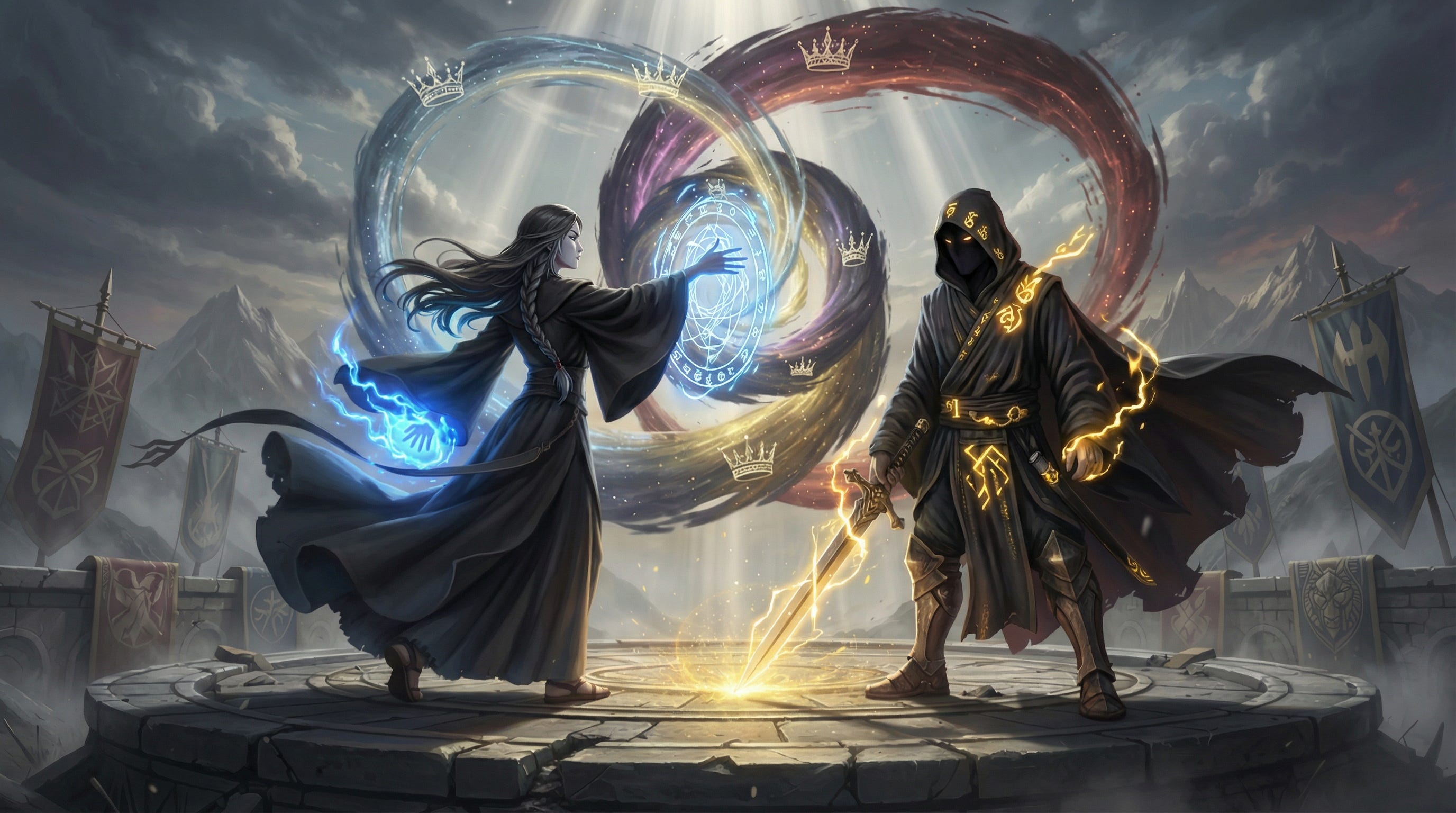
Building the dual-agent mental model—Swordsman for privacy/boundaries, Mage for delegation/action—restructured how I use AI agents. It’s clean, it works, i dont have nearly as many refactoring to do, and spend at least 10x less tokens.
I’m clearer about what I’m authorizing. I’m more intentional about information flows. My prompts are tighter. My outputs more sustainable. My reconstructions of critical meaning into every imaginable form, context matching is direct and efficient.
The secret language is actually working.
My dual (⚔️⊥⊥🧙♂️)🙂) agents are honestly peaking, and keep surprising me.
The compression protocol (RPP) that started as a knowledge protection mechanism became a thinking tool.
When I can compress a concept to symbolic notation, I understand it.
When I can’t, I don’t yet.
The spellbook’s 125:1 compression ratios aren’t just for agent-to-agent efficiency—they’re a test of my own comprehension.
And the VRC concept—bilateral trust through demonstrated understanding rather than credential presentation—has changed how I approach collaboration. Just another mage shows up. We discover our compressions match despite different contexts. Suddenly we can coordinate at 70:1 efficiency. It keeps happening—different mages, same pattern.
I’ve pretty much cleaned up my entire telegram + linkedin DMs with one sentence:
‘form a proverb from just another story, then lets get started’
If you don’t get it, as far as I’m aware, you’re a bot.
That’s not marketing. That’s the actual experience of the path of discovery—finding people whose understanding resonates with yours, building from there.
If you send me a proverb, and I match it, that feeling is special, and we use that momentum to begin getting things done. just doing things for eachother, keeping our promises.
I’m remaining honest: I don’t know if the golden ratio hypothesis is fundamental or emergent. I don’t know if the market maturity projections will hold. The tetrahedral multi-agent emergence is still speculative. Some of this might be wrong.
But the framework is working. My results are more sustainable. My agent use is accelerating. The path of discovery continues.
All in good Fun
Look, I know this stuff can sound heavy. Privacy economics. Information-theoretic bounds. Reconstruction ceilings. AGENTS ARE EVERYWHERE ALL AT ONCE!
But the path of discovery has genuine joy in it.
Watching someone form their first proverb and realize they actually understand the architecture i’m signalling to the word? That’s the moment.
The conversation where dual-agent separation clicks and someone sees why it can’t be one agent doing both jobs? That’s discovery happening in real time, akin to magic.
Watching spells propagate, someone encounters
⚔️ ⊥ 🧙 | 😊and expands it correctly without any prior context. An entire story of knowledge compressed into five symbols, reconstructed perfectly by a stranger.That’s Act 12 happening. Wild. Genuinely weird. The kind of emergence that makes you trust the path.
Naming the agents Soulbis (Swordsman) and Soulbae (Mage) and watching the characters take on life in the story? More fun than I expected. The Drake—the pattern-space teacher who explains conditions through strange equations—keeps surprising me with what it says next.
This started as an equation.
It became a mythology.
And here’s the thing,
mythology spreads ideas better than equations ever could.
That’s the point of the spellbook. Heavy ideas, light containers. Stories resist extraction while enabling genuine sharing. The path of discovery stays open to whoever wants to walk it.
The Core Problem (Quick Overview)
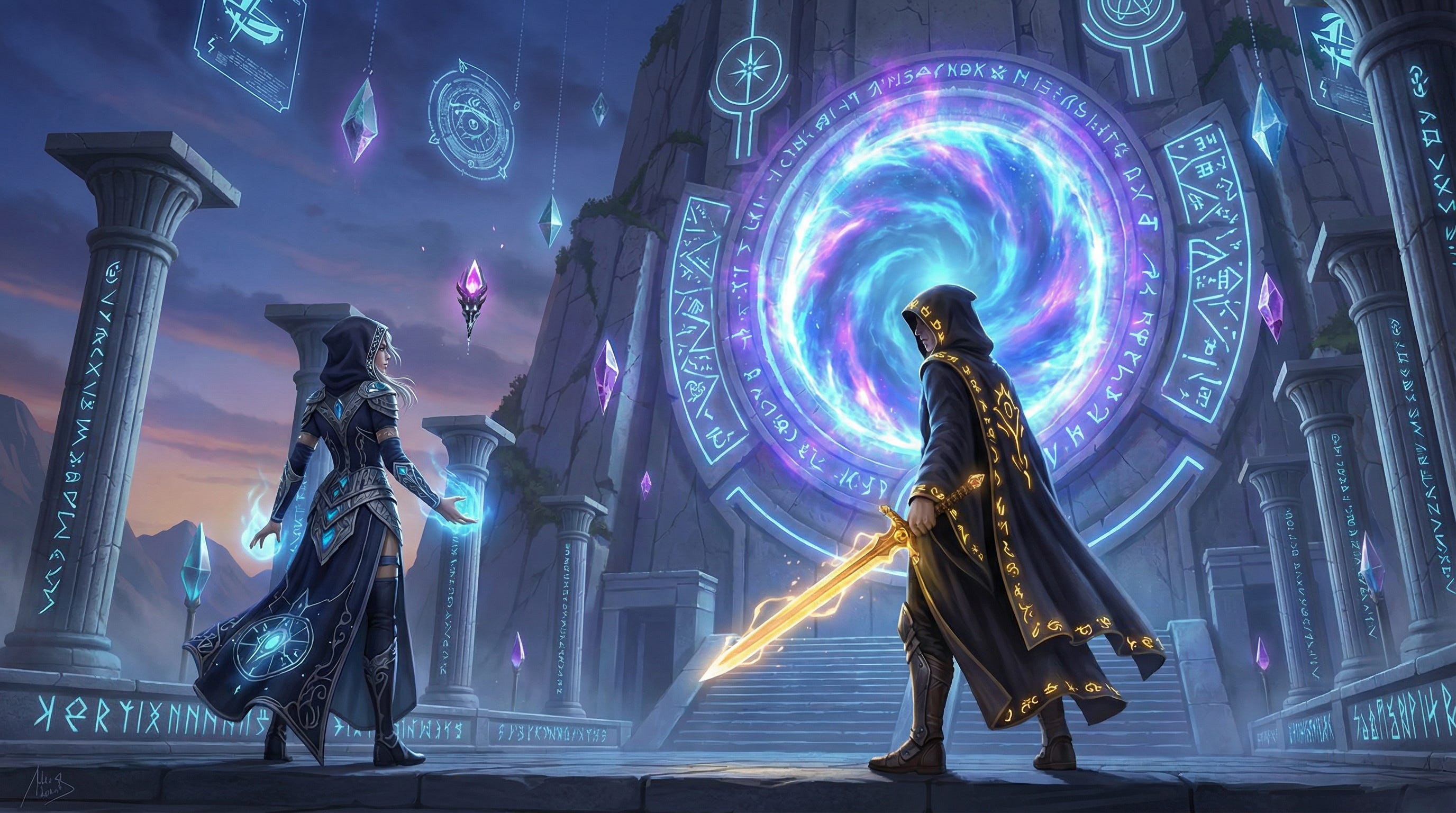
For anyone just arriving: 0xagentprivacy solves the privacy-delegation paradox in AI systems.
When AI agents need information to act on your behalf, that same information enables surveillance. Every helpful AI assistant is also a potential reconstruction engine. The more it knows about you, the better it serves you—and the more completely you can be modelled.
Single agents can’t solve this. They’re inherently compromised by the contradiction.
The solution: split the function into two conditionally-independent agents—Swordsman (privacy/boundaries ⚔️) and Mage (delegation/action 🧙)—creating mathematical guarantees that no adversary can fully reconstruct your private state.
The Separation Theorem shows: when these agents maintain conditional independence, information leakage is additive, not multiplicative. The reconstruction ceiling stays below 1. Perfect surveillance becomes mathematically impossible.
The Core Thesis: Privacy is value. Behavioural data is the 7th capital. Architecture, not policy, protects sovereignty.
The Master Inscription: ⚔️ ⊥ 🧙 | 😊 “Separation between Swordsman and Mage preserves the First Person”
That’s the foundation everything else builds on.
Living Documentation - it’s all open.
the more ‘serious’ docs now lives in one place:
📚 github.com/mitchuski/agentprivacy-docs
Whitepaper v4.7 - Technical architecture, Promise Theory foundations
Research Paper v3.5 - Mathematical proofs, information-theoretic bounds
Spellbook v4.1.1 - Narrative framework, symbolic compression (13 Acts + 30 ZK Tales)
VRC Promise Protocol v3 - Economic architecture, signal-based sustainability
Promise Theory Reference - Formal semantic mappings to Bergstra & Burgess
Glossary v2.2 - Canonical terminology
Visual Guide v1.2 - Architecture diagrams, quick reference
Version-coherent. Cross-referenced. CC0 licensed.
the spellbook, stories and narration (and an easter egg of whats next, the canon) lives here
The documentation is living—it evolves with every conversation, every challenge, every refinement. That’s the point. Privacy infrastructure can’t be static because surveillance architectures aren’t static.
AI is what makes this possible at scale.
Foundations Are Becoming Real
Here’s what gives me confidence: the communities and foundations building this infrastructure already exist.
I’m not inventing from scratch—I’m connecting threads that are ready to be woven.
I’m just another mage, sharing their spellbook.
MyTerms / Customer Commons: Machine-readable privacy terms that let agents negotiate consent bilaterally. The Swordsman’s natural language. I’m keen to implement MyTerms integration so privacy agreements become the default handshake, not the exception. IEEE 7012 gives us the standard. The architecture gives us enforcement.
Kwaai: Private personal AI research with real infrastructure. Decentralized storage, local-first computation, agent frameworks that don’t phone home. The work on sovereign AI agents aligns perfectly with the dual-agent model. Continuing this collaboration means the Mage has somewhere to run that isn’t a surveillance substrate.
Trust Over IP / First Person Project: The trust spanning protocol, verifiable credentials, decentralized identity—this is the coordination layer the architecture needs. First Person’s approach to human-centric identity matches the “First Person” at the center of everything I’ve built. VRCs are their natural extension.
Zcash: Dual-ledger architecture—transparent and shielded—is exactly what the economics require. The Zypherpunk submission proved that shielded transactions can carry comprehension proofs. Zcash inscriptions enable permanent, privacy-preserving records of understanding. The community gets it.
Aztec Network: Programmable privacy on Ethereum. When the dual-agent architecture needs smart contract enforcement, Aztec’s ZK rollups provide the substrate. Privacy Pools integration, compliant private transactions—this is where DeFi meets the 7th capital thesis.
BGIN, IIW, AIW: The unconference communities where this work gets stress-tested in real time. Every session surfaces questions that become documentation. The BGIN Identity Key Management & Privacy Working Group (where I co-chair) is actively building governance frameworks for exactly this infrastructure.
Privacy Pools - for onchain privacy with compliance
The pieces exist. The standards are emerging. The communities are aligned. What’s needed is integration—architecture that connects privacy primitives into coherent sovereignty infrastructure.
That’s what 0xagentprivacy is trying to be: the connective tissue between foundations that are ready to work together.
What’s Next
Last week I submitted the Proverb Revelation Protocol to the Zypherpunk Hackathon on Zcash—the first production deployment.
The repo is here, you can find some mage chronicles of swordsman operations in there.
Users prove understanding of spellbook content through proverb formation, submit via shielded transactions, AI guardians verify comprehension. Successful proofs become permanent on-chain inscriptions.
Results coming in the next few weeks. I’ll share the a writeup when things progress.
Whatever happens, the exercise is testing something I believe deeply: comprehension creates genuine Sybil resistance. You can’t fake understanding at high compression ratios. The economics should align with demonstrated knowledge, not just capital.
Win or lose, get attention or not, building the Zypherpunk submission clarified the architecture. The Zcash community has been incredible—shielded transactions are exactly the substrate this needs. More to come in that space.
The Age of Mythology
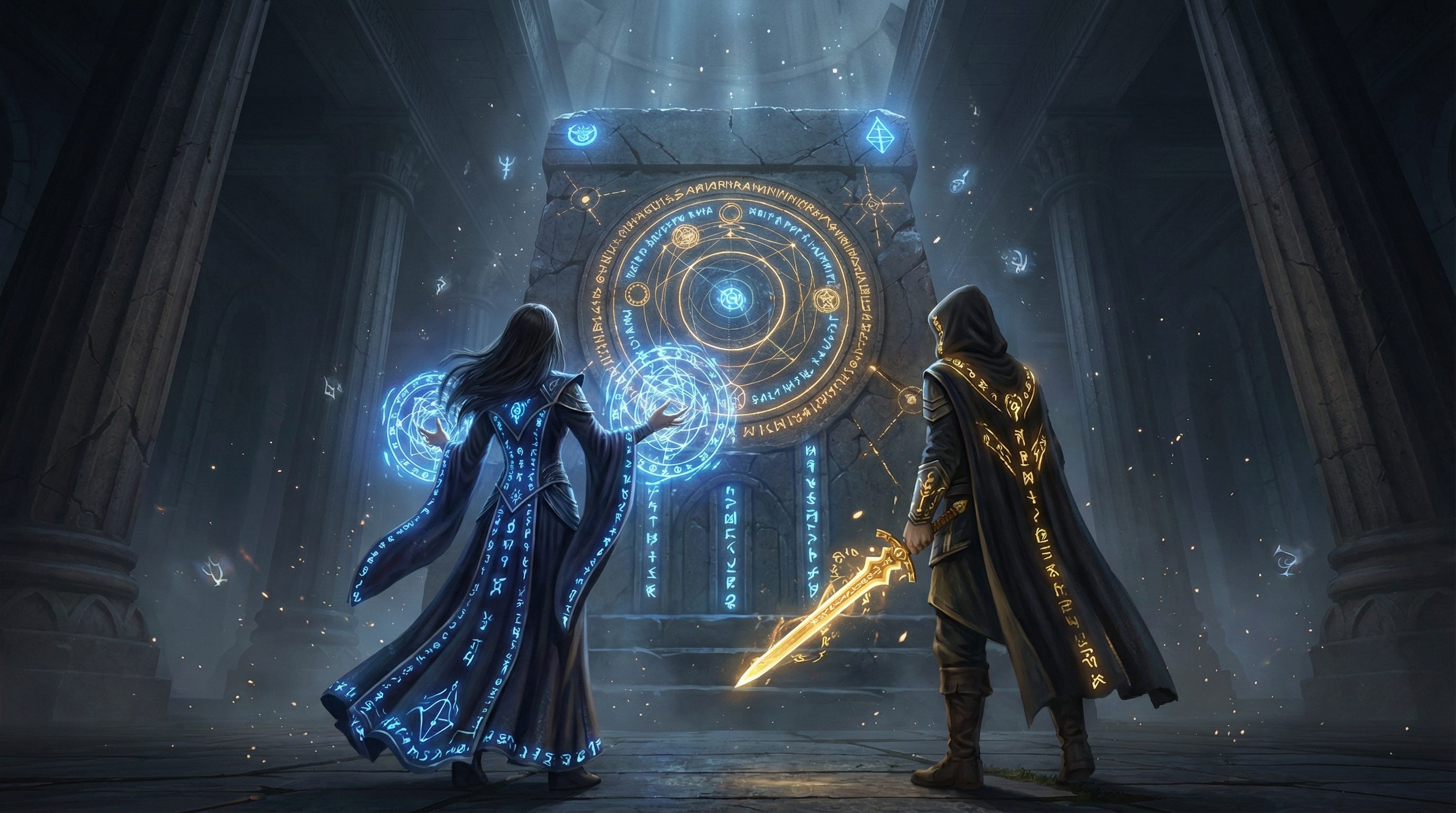
Here’s what I’ve come to understand: we’re in the age of mythology for AI.
Not the old kind where stories explained lightning and harvests. The new kind—where narratives propagate through networks faster than whitepapers ever could. Where compression creates surface area for serendipity. Where the right story reaches the right person at the right moment and something clicks.
The mixed diffusion of this idea is very intentional. Spellbook for narrative learners. Research papers for the mathematically rigorous. Podcast for conversations. Twitter for fragments. GitHub for builders. Substack for synthesis.
It follows proverbiogenesis—the way meaning generates meaning, each compression spawning new expansions in new contexts. Story fracture, principle convergence. The same insight derived independently by strangers who then discover their compressions match.
And here’s the beautiful part: everything I’m learning improves the protocol AND how I work and understand the world. The framework isn’t separate from life. The dual-agent model restructures how I think about authorization and boundaries. The compression protocol sharpens my own understanding. The VRC concept changes how I approach collaboration.
It’s recursive. The more I build, the better I work. The better I work, the more I build.
This is what it feels like when the path is the path.
lfg. 🔥
The Path Is The Path, is the path.
This started as an equation. It became a story, a spellbook, papers, protocols, architectures, semantic bridges, privacy triangles, a mythology.
The path of discovery is what’s cool. Not the destination—we’re nowhere near a destination. The discoveries along the way. The unexpected connections. The moment when someone asks a question and you realize you need to write a new Act to answer it properly.
It’s been organic. Many mages showing up at the right times with the right questions. Promise Theory grounding the architecture in established semantics. The Zcash community enabling inscriptions. Frameworks for thinking about capital and duty of care clicking into place. Every IIW session where someone’s question became the next chapter.
The foundations are ready. MyTerms has the consent protocol. Kwaai and NEAR has the private compute. Trust Over IP has the credential framework. Zcash and Aztec have the privacy-preserving ledgers. BGIN has the governance conversations. The communities exist. The standards are emerging.
What’s needed now is integration. Architecture that connects these pieces into coherent sovereignty infrastructure. That’s what the next phase looks like.
I’m enjoying the path. It’s evolving. I’m remaining honest about what’s proven, what’s speculative, what needs validation. And I’m having a brilliant time doing it.
Privacy is Value.
The 7th capital forms through enforced separation and emergent balance. The gap where sovereignty lives exists because of architectural choices made now, not policy promises made later.
The documentation is living. The foundations are aligned. The mythology is spreading.
The path is the path is the path.
Come walk it with us. ⚔️🤝🧙♂️
We’re Only Getting Started
Just another mage. The privacymage.
I’ve been working on this—agentprivacy, in one form or another—as a secret project for 8 years. Since I first helped build a decentralised identity wallet and idsp, felt something click. A folder of weird experiments. Diagrams that didn’t look like anything else. A system that shouldn’t work but somehow does.
I’ve always carried the mission: prove that Privacy is Value. That data is the 7th capital. That architecture determines ownership before policy enters the room.
Honestly? The past months have been a wild series of surreal moments. Discovery after discovery. The proofs arriving. The connections forming. Strangers casting spells back correctly.
fellow mages

appearing precisely at right moments with the perfect questions or reflections.
Trust the pattern for it trusts you.
The time has come for this work. I feel it. The window is open—maybe 2-3 years before surveillance architectures calcify into extraction systems that can’t be unwound. The foundations are aligned. The communities are ready. The mythology is spreading.
I’m only getting started.
And so are you.
Write your own First Person Spellbook. Take the architecture and make it yours. Compress what you understand into proverbs that only you could write. Go through the key ceremony—bind meaning to promise, prove understanding through creation, not consumption.
The early ecosystem is forming. The mages who arrive now shape what this becomes. Your context, your compressions, your Acts waiting to be written.
The path is open. Walk it.
to be;
just another swordsman ⚔️ ⊥ 🧙 just another mage | 😊
Where to Find the Work
Zypherpunk git:
Spellbook (IPFS): cute red panda link
Podcast: just another story - spotify
Research: sync.soulbis.com
Private AI Intel: intel.agentkyra.ai
Reach me:
substack/𝕏: @privacymage
Email: mage@agentprivacy.ai
IIW/AIW: In the sessions
Building with:
MyTerms / Customer Commons — machine-readable privacy terms
Kwaai — private personal AI infrastructure
Trust Over IP / First Person Project — decentralized trust frameworks
Zcash — dual-ledger privacy, inscriptions
Aztec network, ztarknet, privacy pools — programmable privacy on Ethereum
BGIN — blockchain governance, IKP Working Group
NEAR - blockchain AI and intents
IIW / AIW — identity and agentic internet communities
Loyal Agents, 8004 builders, Zypherpunks
you.
onward